
A trike is a three-wheeled vehicle that does not fall into the classic categories of the highway code. To circulate legally in France, each trike must undergo a reception procedure certifying its compliance with technical safety and emissions requirements. Without this validation, no registration certificate can be issued.
Refusal of registration for a transformed trike: the trap of poorly framed reception
The most common scenario for administrative blockage concerns trikes resulting from artisanal transformation. An owner has a motorcycle modified into a trike by a workshop, rides for a few months thinking they will regularize later, and then encounters a refusal of registration. The reason is almost always the same: the technical modification was not framed in advance with the correct reception procedure.
An individually transformed trike does not benefit from a type approval granted to a manufacturer for a series. It falls under isolated reception (RTI), a procedure that must be initiated before or during the transformation, not afterward.
When a vehicle is presented to the DREAL while the work is already completed without prior follow-up, the administration cannot verify the compliance of the intermediate steps. The file is then incomplete, and the vehicle may be declared non-compliant, even if the transformation is technically correct. Restarting the procedure sometimes involves dismantling parts to allow for a complete inspection.
To better understand each step of the process, the homologation procedure for a trike on Autos Actus details the points of vigilance to be respected from the outset of the project.
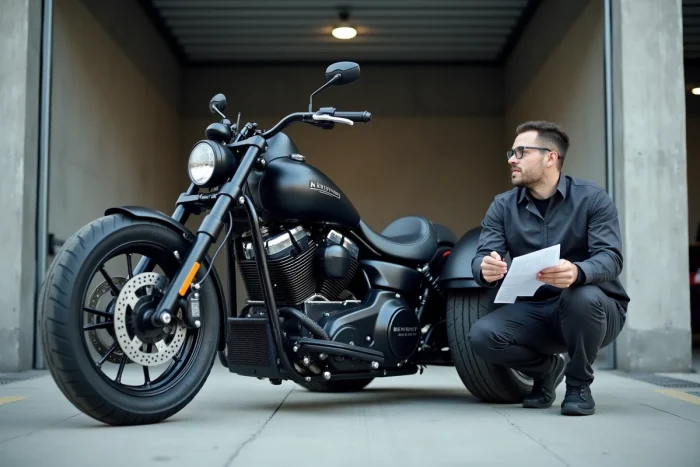
Isolated reception RTI: the central procedure for a trike
The RTI is the act by which the DREAL (Regional Directorate for the Environment, Planning and Housing) certifies that a given vehicle, taken individually, complies with the applicable technical regulations. This procedure applies to new vehicles not in series, transformed vehicles, and imported vehicles lacking valid European reception.
Distinction based on the origin of the trike
The administrative framework varies depending on the nature of the trike. A model purchased new from a manufacturer with type approval does not need an RTI: its homologation is already secured. In contrast, three scenarios require the RTI:
- A trike resulting from an artisanal transformation of an existing motorcycle, where the chassis and geometry of the vehicle have been significantly modified.
- A trike imported from outside the European Union, which does not benefit from any reception recognized by member states.
- A vehicle already registered that has undergone notable modifications affecting its original technical characteristics (wheelbase, number of wheels, braking system).
This distinction conditions the documents to be provided, the checks to be passed, and the timeline of the process.
Submission of the file to the DREAL
The RTI application file is submitted to the DREAL of the region where the vehicle is located. It must contain the technical elements allowing the administration to verify the trike’s compliance with applicable standards. Among the expected documents:
- A complete technical description of the vehicle (dimensions, weight, engine, braking and lighting systems).
- Proof of compliance for the components used during the transformation (certificates for parts, test reports if applicable).
- The registration certificate of the original vehicle, if the trike results from a transformation.
- A technical inspection report or an inspection report if the DREAL requires it before examination.
The vehicle is then physically presented for inspection. The DREAL checks the consistency between the submitted file and the actual state of the trike. Any discrepancy between the documents and the vehicle leads to a rejection or a request for compliance.
Transformation kits with stabilizers: a regulatory deadlock
Some kits sold online, particularly manufactured in Portugal, allow for the addition of two rear wheels to a motorcycle while retaining the original wheel. These devices are strictly prohibited in France. The vehicle modified with a stabilizer kit does not correspond to any regulatory category of two, three, or four wheels.
The installation of such a kit radically modifies the technical characteristics of the vehicle (geometry, road behavior, weight distribution). It cannot be considered a simple accessory. The resulting trike is non-compliant, non-homologable, and its use on the road exposes the owner to a fine and vehicle immobilization.
Before investing in a transformation, ensuring that the chosen process is compatible with an RTI application avoids irrecoverable expenses.

Registration after homologation: the post-RTI steps
Once the RTI report is obtained from the DREAL, the trike is still not compliant for circulation. Registration is a distinct step from reception, and it requires its own procedures.
The owner must submit a request for a registration certificate, attaching the reception report issued by the DREAL, proof of identity, proof of residence, and, depending on the case, an insurance certificate. The application is made through the vehicle registration system, online or via an authorized professional.
If the trike comes from a transformation, the registration document of the original vehicle must be updated to reflect the new technical characteristics: category, number of wheels, fiscal power. An oversight on this point can lead to a refusal during a road check, even if the vehicle has been properly received.
License required to drive a trike in France
Driving a trike in France requires either a motorcycle license (category A) or a car license (category B) held for more than two years, supplemented by a specific seven-hour training. Holders of the B license obtained from January 19, 2013, must also be over 21 years old.
An exemption from the seven-hour training exists for drivers who can prove they used a light motorcycle or a three-wheeled scooter between January 1, 2006, and December 31, 2010, upon presentation of an information statement issued by their insurer.
Outside of France, an A license is generally required, complicating cross-border use for holders of only a B license.
The most often underestimated point in a trike project remains the sequencing of procedures. Initiating the RTI before starting the transformation, compiling the technical file throughout the project, and only launching the registration after obtaining the report: this order avoids the majority of administrative blockages observed in practice.