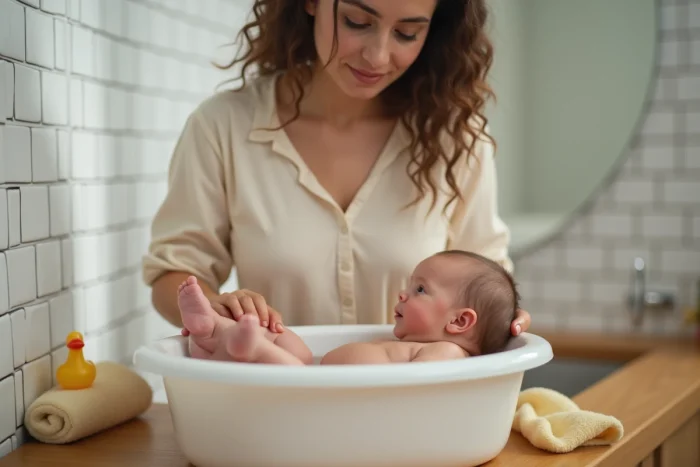
The baby bath often leads to rapid sleep, sometimes just a few minutes after drying. This phenomenon is not trivial: it is based on precise physiological mechanisms related to the still immature thermoregulation of the infant and the response of their nervous system to warm water.
Vasodilation and thermoregulation of the infant after the bath
When a baby is immersed in warm water, their skin blood vessels dilate. This phenomenon, called peripheral vasodilation, allows the body to release the heat accumulated by the skin.
In adults, this regulation occurs smoothly. In infants, the thermoregulation system is still immature. The baby’s body reacts more intensely to ambient heat, triggering a cascade of responses: deep muscle relaxation, a drop in tone, and a rapid decrease in alertness.
After the bath, body temperature begins to drop. This thermal descent sends a signal to the brain that promotes melatonin production and prepares the body for sleep. As explained in an article on baby fatigue on Mômes et Merveilles, this heat-relaxation-sleep mechanism is the main driver of the “fatigue wave” observed after the bath.
The baby does not fall asleep because they are “relaxed” in the psychological sense. Post-bath fatigue is primarily a thermal response of the body, amplified by the immaturity of their autonomic nervous system.
Water temperature and bath duration: the threshold between relaxation and thermal exhaustion
Most content about baby baths presents this moment as systematically soothing. The reality is more nuanced: beyond a certain threshold of heat or duration, fatigue shifts towards mild thermal exhaustion.
The signs of a baby who has exceeded this threshold are identifiable:
- Pronounced redness of the skin, persisting for several minutes after leaving the bath
- An abnormally low tone (baby “floppy,” difficult to stimulate during drying or feeding)
- Excessive drowsiness, different from the usual peaceful falling asleep
- Irritability at the time of dressing or feeding that follows
These manifestations resemble the early stages of heat exhaustion. For an infant, whose body surface area-to-weight ratio is much higher than that of an adult, water that is too hot or a prolonged bath represents a significant thermal load.
The classic pediatric recommendation sets the water temperature around 37 °C. Beyond that, the risks of thermal overload increase. Duration also matters: the younger the baby, the shorter the bath should be. For the first few weeks, a few minutes are sufficient to ensure hygiene without causing excessive fatigue.
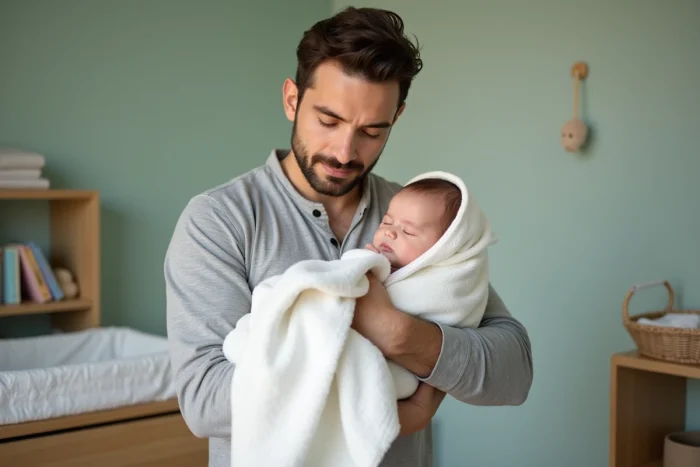
Quick drying and dressing protect thermal regulation
A detail often overlooked: the critical moment is not limited to the bath itself. Exiting the water exposes the infant to a sudden drop in temperature due to evaporation. Quick drying, with pre-warmed towels if possible, and immediate dressing limit this heat loss.
This step is an integral part of the process. A baby left wet for too long after the bath expends energy to maintain their temperature, which exacerbates fatigue.
Post-bath fatigue of the baby and quality of nighttime sleep
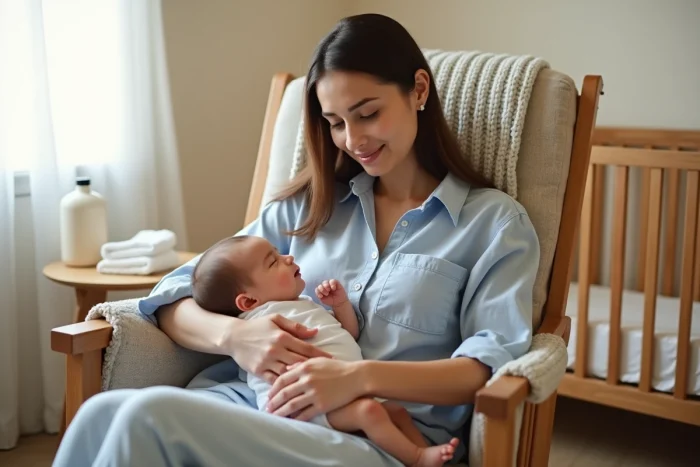
The fatigue induced by the bath is not just a side effect to manage. When used correctly, it becomes a lever to improve falling asleep. The principle is based on the thermal curve: the drop in body temperature after the bath coincides with the natural peak of melatonin secretion at the end of the day.
For this mechanism to work, the bath must be given early enough before bedtime. A bath taken too late, just before putting the baby to bed, does not leave enough time for the body to initiate the thermal descent. An interval of one to two hours between the bath and bedtime generally produces the best effect on sleep.
Adapting the ritual to the baby’s age and temperament
Not all babies react the same way to the bath. Some infants show signs of fatigue within the first few minutes in the water. Others remain energetic and awake long after exiting.
Observing the specific reactions of your child is more reliable than following a rigid protocol. The signs to watch for:
- Repeated yawning during or just after the bath
- Rubbing of the eyes or ears
- Decreased motor activity (fewer kicks in the water)
- Fixed or slightly glassy gaze
These indicators allow for adjusting the duration and timing of the bath over the weeks, as the baby’s thermoregulation matures.
Bath environment and sensory stimulation: their role in fatigue
The bath is not just a thermal experience. It is also an intense sensory stimulation for an infant. The contact of water on the skin, the sounds of splashing, the brightness of the room, the parent’s movements: each stimulus engages the baby’s nervous system.
This combined sensory load with thermal effort explains why the bath is more tiring than a simple moment of carrying or cuddling, even if the duration is comparable. The baby’s brain processes a considerable volume of sensory information during the bath, which consumes energy.
Reducing stimulation during the bath (dim lighting, calm voice, no multiple toys) helps preserve the relaxing effect without tipping into overstimulation that, paradoxically, can make falling asleep more difficult.
The temperature of the room where the bath takes place also plays a role. A bathroom that is too cool forces the baby’s body to fight against the cold upon exiting, generating stress rather than relaxation. A sufficiently heated room or bathroom prolongs the gentle transition between water and bed.
The baby bath affects fatigue through three simultaneous channels: thermoregulation, sensory stimulation, and the hormonal response to the drop in temperature. Understanding these mechanisms allows for using this moment as a concrete tool for sleep while recognizing the signs that indicate the infant’s body has reached its limit.