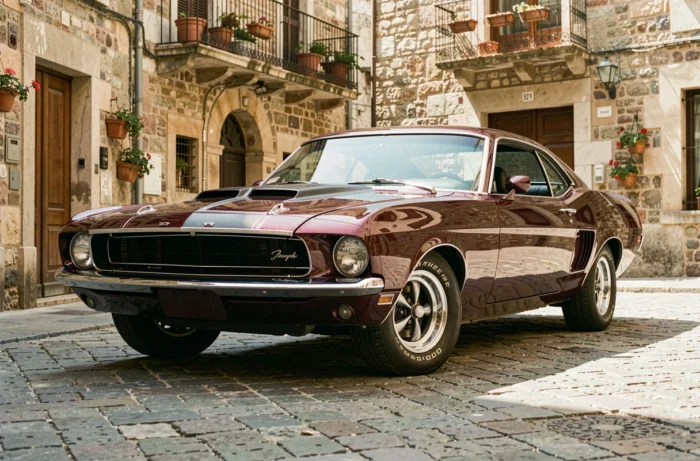
The classic car market is undergoing rapid changes. With new administrative rules, evolving tastes among collectors, and must-attend events, enthusiasts have plenty to adjust their radar. Here are the topics that really matter as we approach the end of 2026.
Collection registration: VAT on the FFVE certificate changes the game
Have you already applied for a collection registration? Since October 1, 2026, the FFVE certificate is subject to a 20% VAT. In practice, this increases the procedure’s cost for anyone regularizing a classic vehicle.
However, the collection registration remains advantageous. It entitles holders to a five-year technical inspection (instead of biennial) for the vehicles concerned. Models manufactured before 1960 even benefit from a specific regime that exempts them from this inspection.
To keep up with these administrative changes and anticipate the real costs of a collection registration, regularly check the news on classic cars regarding this topic.
Before launching a request, check these points:
- The age of your vehicle: it must be at least 30 years old to qualify for collection status, except in special cases related to historical interest
- The compliance of the file: the FFVE certificate requires specific documents regarding the vehicle’s authenticity and original condition
- The overall budget: now add the 20% VAT on the certificate to the usual cost of the registration
Youngtimers from the 1980s to 2000s: the generational shift in the market
Pre-war cars and those from the 1950s to 1970s are finding it harder to attract buyers. This observation, reported by La Dépêche in September 2026, reflects a clear shift in purchasing habits.
Younger buyers are looking for models associated with their childhood. Youngtimers from the 1980s to 2000s, long considered too recent to be collected, are attracting a new generation of enthusiasts.
Why this shift? The explanation is both emotional and financial. A model from the 1990s remains more accessible to purchase, easier to maintain (parts still available from some suppliers), and simpler to use daily than a car from the 1950s.
For collectors who own older models, this trend isn’t necessarily bad news. It simply means that the market is becoming more segmented by generations. Major auction houses like Aguttes or Artcurial are already adapting their catalogs accordingly.
Authenticity and documentation: what truly determines the value of a classic
Restoring a classic car is no longer enough to guarantee its value. Market data presented by the Guida al Mercato of Ruoteclassiche in October 2026 confirms a strong trend: vehicles preserved in their original paint with complete history are gaining the advantage.
The value gap between a well-documented vehicle and a restoration without traceability is widening. An original maintenance booklet, repair invoices, period photos, and a registration certificate consistent with the chassis history: these elements are increasingly significant in appraisals.
What experts prioritize
A classic car expert will first check the consistency between the chassis number, the engine, and the documentation. Then, they will assess the authenticity of the mechanical and body components.
A complete restoration without original documentation is worth less than a patinated but traceable vehicle. This is a paradigm shift for enthusiasts used to prioritizing cosmetic condition.
Low Emission Zones and classic vehicles in France: where do we stand?
Low Emission Zones remain a concern for classic car owners. The question frequently arises: can you still drive freely with a classic vehicle in major cities?
The situation varies by municipality. The European Metropolis of Lille, for example, officially responded to local federations’ inquiries in September 2026. Exemptions for classic vehicles exist but are regulated and depend on local policies.
For enthusiasts who use their classic daily or during events, the Crit’Air sticker and collection status are two distinct levers. The collection status on the registration does not automatically exempt from ZFE restrictions. It is necessary to check the exemption conditions municipality by municipality.
Classic car events: the key dates
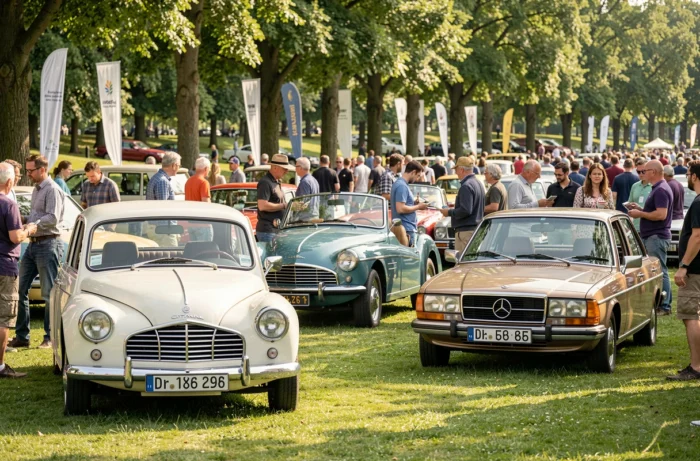
The event calendar remains busy. The Rétromobile show at Paris Expo Porte de Versailles is still the major event at the beginning of the year, featuring thousands of vehicles on display and associated auctions.
Epoqu’Auto in Lyon complements a national calendar that covers several regions of France.
- Rétromobile (Paris): the largest French show dedicated to classic vehicles, with auctions and spare parts dealers
- Tour Auto: a historic rally crossing several regions, open to period sports cars
- Epoqu’Auto (Lyon): a generalist show combining exhibition, swap meet, and activities
- Goodwood Revival (United Kingdom): for those wanting to cross the Channel, a total immersion in the atmosphere of racing from the 1940s to 1960s
The landscape of classic cars in France is evolving quickly. The rising cost of the FFVE certificate, the shift towards youngtimers, and the growing importance of original documentation are reshaping collectors’ priorities. Staying informed on these topics is essential to protect the value of one’s vehicle as well as the pleasure of driving it.