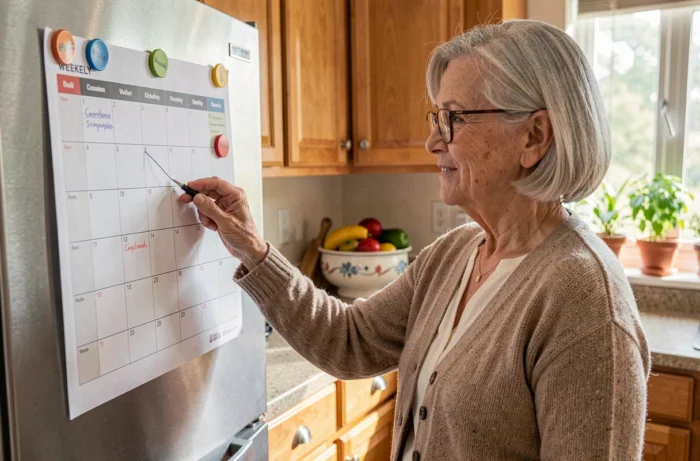
A home helper who doesn’t show up on a Tuesday morning, and no one to report it until the next day. This type of situation, common in home services, illustrates a concrete problem: without a reliable tracking tool, the senior and their loved ones navigate blindly. The Logisfil scheduling system addresses this need by making each intervention traceable and accessible from a dedicated beneficiary space.
Logisfil Telemanagement and Transition to Home Autonomy Services
The usual content presents Logisfil as a simple time-tracking system. It overlooks a structural change. Since 2023, the former SAAD, SSIAD, and SPASAD have merged into Home Autonomy Services (SAD), with a distinction between “assistance” services and “assistance and care” services. This reform, documented by the Ministry of Solidarity, strengthens the requirement for coordination between daily assistance and care.
Logisfil is directly aligned with this logic. Each visit by a caregiver is time-stamped and linked to the SAD structure, allowing the beneficiary to verify that all scheduled services (cleaning, bathing, accompaniment) have indeed taken place. When using the Logisfil schedule for beneficiaries, one accesses a history that reflects this new organization of services.
The stakes go beyond mere comfort. Funders (departments, pension funds) require rigorous traceability to validate billed hours. The schedule accessible by the beneficiary then becomes a shared verification tool, not just a passive calendar.

Verification of Home Interventions: What the Schedule Shows in Practice
On the ground, consulting the Logisfil schedule boils down to three pieces of information per intervention: the date, arrival time, and departure time. It’s straightforward, but it’s precisely what matters for spotting discrepancies.
Identifying a Missed or Shortened Intervention
A scheduled two-hour visit that lasts only forty minutes is immediately visible in the history. The beneficiary can report the discrepancy to their structure before billing, preventing payment for an unrendered service. Without this tool, contestation relies on the memory of the elderly person, which is often questioned.
Feedback varies on this point: some structures update the schedule in real-time, while others do so with a delay of several hours. Reliability depends on the method of tracking used (badge installed at the beneficiary’s home, caregiver’s work phone, or QR code).
Securing with Badges and Professional Phones
A feedback report from ADAR of Dourgne, published in September 2026, indicates that since the activation of telemanagement in 2025, employees have professional phones and badges installed at the homes of those they assist. This system doubles traceability: the badge confirms physical presence at the home, while the phone records the times.
This dual tracking reduces disputes between beneficiaries, caregivers, and structures. For the senior, this means tangible proof in case of disagreement over the hours worked.
Access to the Logisfil Beneficiary Space: Real Obstacles
We often talk about the ease of access to the schedule, but less about the practical difficulties seniors face in connecting to it.
- The identifier is a five-digit number, available on the structure’s invoices. If the person does not keep their invoices, they must contact their service provider to retrieve it.
- The password corresponds to the date of birth in the format YYYYMMDD (for example, 19380415 for April 15, 1938). This unusual format generates frequent errors among users who are not familiar with digital tools.
- In case of lost identifiers, the reset must go through the structure’s manager, with a variable delay of a few hours to several days depending on the service’s responsiveness.
These constraints are not trivial. For someone over 80, typing eight digits without spaces on a phone screen can sometimes feel like an obstacle course. Delegating access to a close caregiver then becomes a pragmatic solution.
Coordination Between Seniors and Caregivers Through the Logisfil Schedule
The schedule becomes truly valuable when a family caregiver, often geographically distant, can access the same information as the beneficiary. Sharing login credentials with a son or daughter allows for monitoring the regularity of visits without having to call the structure every week.
The caregiver identifies anomalies that the senior may not always report: a canceled intervention without a replacement, a schedule change not communicated, a gradual decrease in the number of visits. This remote monitoring does not replace the direct relationship with the caregiver, but it complements the vigilance system.
- Check each week that the number of billed hours corresponds to the hours displayed in the schedule.
- Compare actual times with the care plan validated by the department or pension fund.
- Alert the structure in case of recurring discrepancies before the situation deteriorates.
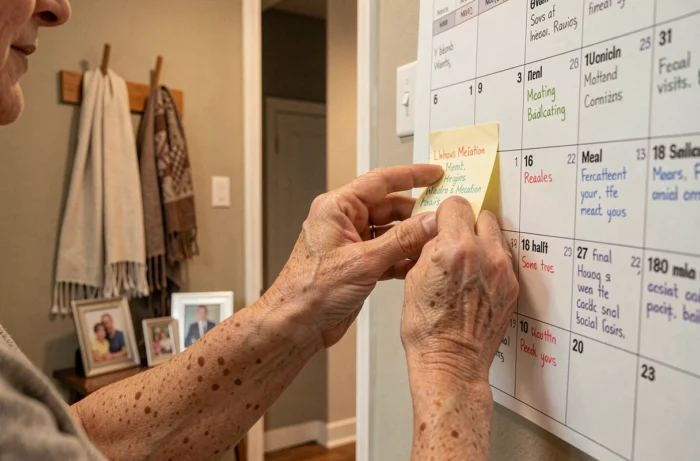
The Logisfil schedule is not a spectacular tool. Its strength lies in its simplicity: raw, accessible data that allows the beneficiary and their entourage to verify that the service paid corresponds to the service rendered. In a context where SADs must account to funders as well as families, this transparency becomes a concrete lever for securing home care.