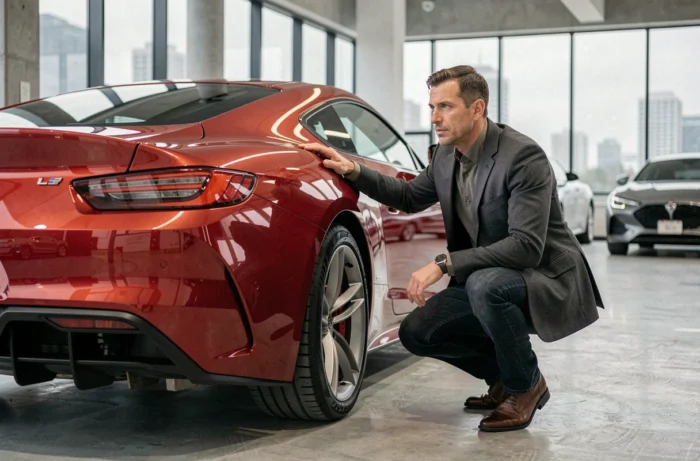
Choosing a sports car means balancing three factors that rarely align: the driving experience you want, the purchase budget, and the true cost of ownership over several years. This article compares these factors across the most common segments of the French market, from compact coupes to mid-size GTs.
Power-to-weight ratio and layout: technical differences between segments
Engine output alone is not enough to rank a sports car. The power-to-weight ratio has a far greater impact on how a car feels than the horsepower figure shown on the spec sheet. A lightweight mid-engined car such as the Alpine A110 (around 1,100 kg for 300 hp) delivers more thrills than a coupe twice its weight with similar power.
The mechanical layout also determines how a car handles. A mid- or rear-mounted engine and rear-wheel drive help keep the center of gravity low and the weight distribution balanced. These technical choices are found in some of the market’s most highly regarded sports cars, from the Porsche 718 Cayman to the BMW M2.
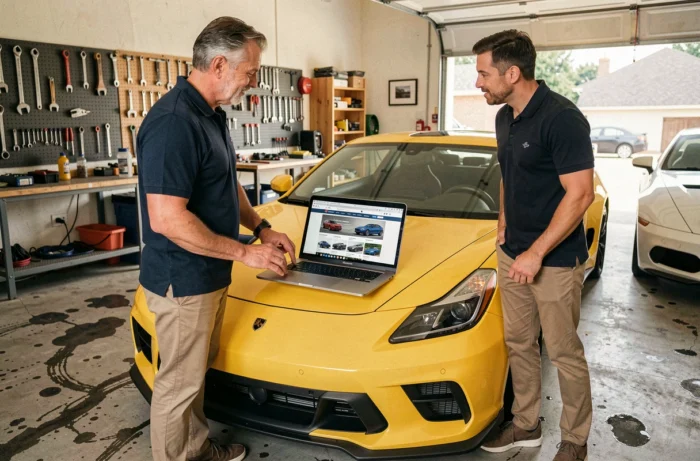
A specialist catalog makes it easy to compare these features across specific new and used models: https://www.maconsport-automobiles.com/ lists this type of vehicle with detailed specifications.

Sports car purchase prices: comparison table by category
Price differences between sports car categories are considerable. The table below outlines the main segments based on data available on the French market.
| Category | Example model | Indicative price range | Typical profile |
|---|---|---|---|
| Compact sports car / roadster | Mazda MX-5 | From around 36,600 euros (new) | Pure driving enjoyment, lightweight, mixed use |
| Mid-engined coupe | Alpine A110 | Mid-range segment (new or lease) | Agility, well-balanced power-to-weight ratio |
| Powerful rear-wheel-drive coupe | BMW M2 (480 hp) | Upper-mid-range segment | High power, road and track use |
| Benchmark GT | Porsche 911 | High-end segment | Versatility, performance, prestige |
| Supercar | Italian or British models | Well above GT prices | Exclusivity, extreme performance |
Buying used opens the door to higher segments. A thoroughly inspected used sports car can deliver performance close to that of a new model at a significantly lower price. The purchase price is the most visible factor, but it accounts for only part of the total cost.
True cost of ownership: taxes, maintenance, and access restrictions in France
The environmental penalty tax can add significantly to the cost of high-powered sports cars. In France, the penalty scale is based on CO2 emissions, and for several years a weight-based penalty has also applied to vehicles above a certain mass threshold. The rules for allowances change regularly.
One often-overlooked point: the registration date determines which tax scale applies, not the order date. A car ordered in 2026 but registered in 2027 could be subject to the 2027 scale, which may be more restrictive. Depending on the model, the difference can amount to several thousand euros.
Sports car maintenance and insurance
Recurring expenses vary considerably between sports car categories:
- High-performance tires wear out faster and cost considerably more than standard tires, especially on wide-track models
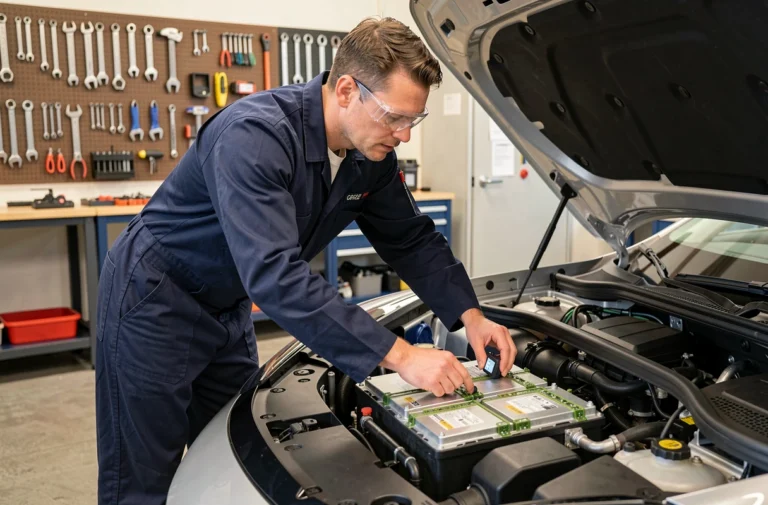
- Brake pads and discs, which are put under greater strain on track or during spirited driving, are maintenance costs to factor in from the outset
- Sports car insurance depends on the vehicle’s tax horsepower, the driver’s profile, and the car’s value, with significant differences between a compact roadster and a high-end GT
Low-emission zones: a location-specific factor to check
LEZ restrictions vary by local authority, area, and time of day. An older sports car with a Crit’Air 3 rating or higher may be banned from certain French cities, including on weekdays. Local schedules change, and some deadlines may be postponed by individual local authorities.
Before buying a sports car for everyday use in an urban area, check the latest local regulations. A general list of LEZs is not enough.
Coupe, convertible, or roadster: which sports car for which use?
The right body style depends as much on how you plan to use the car as on your budget. A roadster such as the Mazda MX-5 prioritizes light weight and a close connection to the road, at the expense of interior space. A mid-engined coupe (Alpine A110, Porsche 718 Cayman) is designed for pure chassis balance. A rear-wheel-drive coupe such as the BMW M2 focuses on raw power while offering greater everyday versatility.
A convertible adds a sensory dimension, but the roof mechanism adds weight and can reduce structural rigidity. Lightweight coupes are the best choice for track-only use. For a mix of road driving and enjoyment, a roadster or compact coupe is generally the most sensible option in terms of enjoyment for the money.
- Regular track use: prioritize the power-to-weight ratio and braking endurance
- Everyday urban use: check LEZ compatibility, comfort, and insurance costs
- Weekend drives and outings: a roadster or convertible adds to the enjoyment without the demands of intensive maintenance
Choosing a sports car is as much about taxes and maintenance costs as it is about the spec sheet. Comparing weight, engine, and the penalty scale that will apply on the planned registration date can help you avoid unexpected costs. The most powerful model is not necessarily the one that delivers the most driving enjoyment for every euro spent.