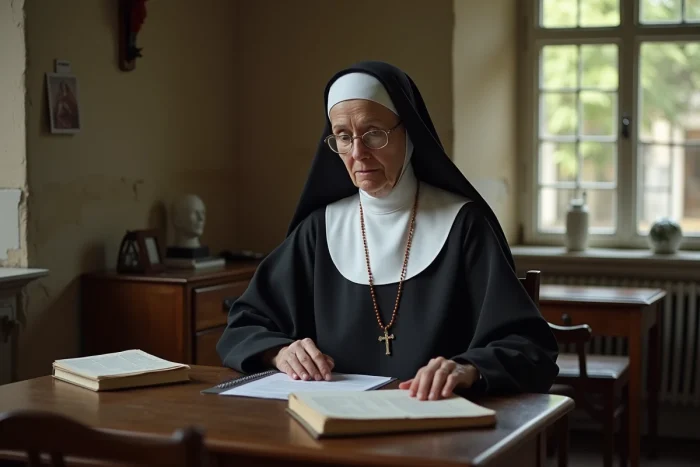
In France, no pay slip bears the name of a nun. Nuns do not appear on any employee register, even when they work full-time in schools, hospitals, or care homes. However, financial transactions exist, but they never go through a personal account.
The rules of religious life require that all income be handed over to the congregation. The amounts paid for their professional activities are directly collected by their community, which takes care of each individual’s essential needs. This system, governed by canon law and tolerated by French legislation, escapes the classic logic of salary.
Life of a nun in France: between spiritual commitment and material reality
The vow of poverty structures the daily life of nuns in France. Upon joining a community, the sisters make a commitment that excludes any individual ownership. No income, no property belongs to them personally. They are part of a collective where the monastery becomes both a place of residence, a workspace, and a core of tangible solidarity.
All income from a sister’s activities, whether in teaching, caregiving, support, or craftsmanship, is paid directly to the religious community. The common budget, managed by a treasurer, covers all needs: housing, food, clothing, healthcare, and sometimes assistance for the most vulnerable. A small amount of pocket money, usually modest, may be allocated by the superior for personal expenses. Daily life is built on mutual support, far removed from an individual remuneration logic.
The salary of a nun in France stands out against the usual conception of salary. No pay slip, no average salary comparable to that of a private employee. Everything relies on pooling resources and the absence of personal ownership. This operation, at the crossroads of spiritual commitment and material reality, invites reflection on the meaning of work, income, and solidarity in French society.
This organization, shaped by tradition and vows of poverty, chastity, and obedience, sets a rhythm where the value of service and sharing supersedes the pursuit of accumulation.
How much does a nun really earn? Decoding a unique economic model
No nun in France receives a salary in her name. This principle, stemming from the vow of poverty, structures the entire economic life of the congregations. Sisters, whether nurses, teachers, social workers, or archivists, can engage in paid work outside. But without exception, all of this income is redirected to the common budget of the religious community.
The operation then relies on a logic of total pooling. The treasurer of the congregation manages financial flows: salaries from outside, income from monastic craftsmanship, pensions, donations from the faithful. This common fund ensures all material needs of the nuns:
- housing, food, clothing, medical care, and sometimes a bit of leisure.
It also happens that the community owns real estate, generating additional resources.
In this system, the superior can grant a small amount of pocket money to each sister. This envelope remains modest and is used for minor personal purchases, incomparable to an individual salary. Here, there are no pay slips, no standard remuneration, no individual monthly salary. The notion of the salary of a nun disappears behind those of sharing and internal solidarity.
Beyond salary: how daily needs and retirement are secured
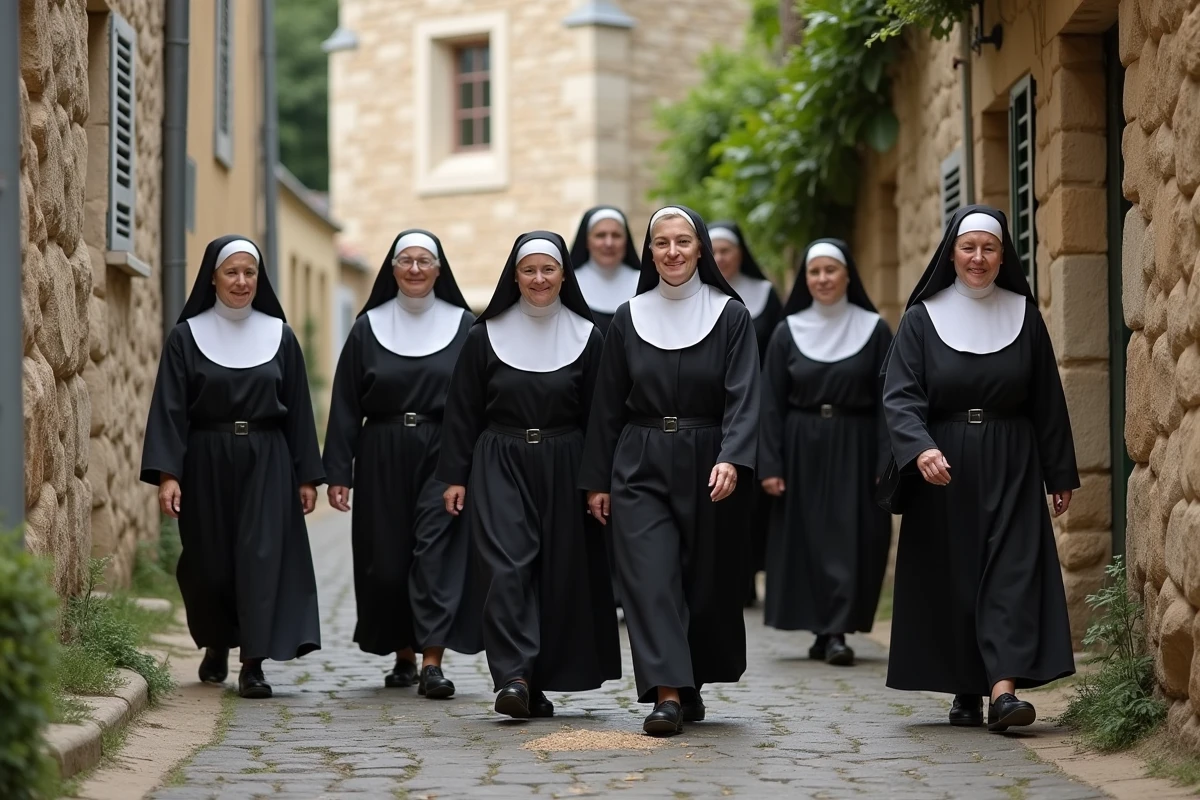
The daily life of a nun in France is based on collective support, entirely organized by the religious community. No pay slips circulate, no individual remuneration exists: what matters is that material needs are covered, thanks to the pooling of resources. Housing, meals, clothing, medical care: everything is managed through a collective budget, under the guidance of the monastery or congregation treasurer.
The question of social protection is crucial. Nuns are affiliated with CAVIMAC (the pension, disability, and health insurance fund for religious), an organization that guarantees their health coverage and retirement. This pension, often modest, complements other group income:
- allowances, income from property, donations.
Retirement, very far from the average salary in the private sector, would not be sufficient to cover needs if the community did not provide a shared foundation.
Intergenerational solidarity plays a central role here: older nuns, sometimes dependent, are supported by the contributions of the younger ones, by the generosity of the faithful, and by meticulous management of the community budget.
Here’s how this organization translates concretely:
- housing and care provided within the community,
- shared retirement among all,
- social protection guaranteed by CAVIMAC.
This way of life relies on sharing and mutual aid, far removed from the standards of the French labor market. Solidarity, here, is not just a motto: it is a lived daily reality, woven into every gesture, every collective decision. At a time when the question of income and the meaning of work challenges society, the model of nuns carves out a unique, radical, and little-known path.