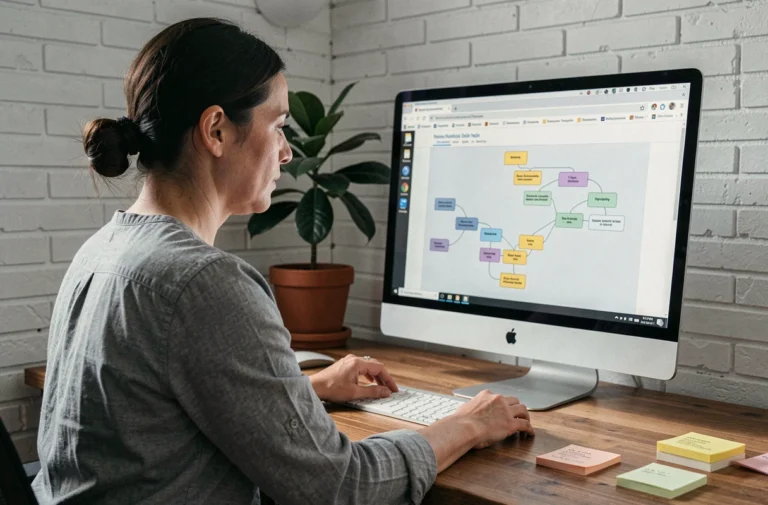
A colleague has just received his new laptop branded “Copilot+”. First reflex: launch an automatic summary of his meeting notes, directly on the machine, without cloud connection. The processing runs in a few seconds thanks to a chip dedicated to artificial intelligence.
This kind of scene, still rare two years ago, is becoming a professional daily routine. Recent high-tech trends are not just about announcements on stage: they are changing the way we work, monitor our health, and shop.
PC with integrated NPU: the hardware renewal that AI demands
Microsoft has set a clear condition for awarding the “Copilot+ PC” label: the machine must include a NPU (Neural Processing Unit) capable of executing generative AI tasks locally. Real-time translation, document summarization, image generation, all without sending your data to a remote server.
Lenovo, HP, Dell, and ASUS are already aligning product lines that meet these specifications. We are witnessing a new cycle of IT equipment renewal, comparable to that triggered by the arrival of SSDs about a decade ago. For those who can access Geek Newz high-tech, detailed comparisons between these machines help identify configurations where the NPU truly makes a difference in daily use.
The point that deserves attention: not all applications are yet taking advantage of the NPU. Gains are concentrated on Microsoft tools (Copilot, Paint, Photos) and a few third-party software like Adobe Premiere. Before changing machines, one should check that their own business tools utilize this hardware acceleration.
Connected rings and health tracking: the rising wearable category
Smartwatches have dominated the wrist for years. The novelty comes from the finger. Samsung has made its Galaxy Ring a flagship product of its ecosystem, alongside players like Oura or RingConn. These rings provide tracking of sleep, stress, and fertility without the bulk of a bracelet or watch.
On the ground, the interest is tangible for people who find watches too bulky at night. The ring is easily forgotten, and the data syncs to a mobile app upon waking. Feedback varies on the accuracy of the stress sensor depending on finger morphology, but sleep tracking is widely regarded as reliable.
What distinguishes a useful connected ring from a gadget
- Battery life: serious models last several days without recharging, while some low-end competitors require daily charging
- Software compatibility: check that the app works equally well on Android and iOS, and that it shares data with the phone’s health ecosystem (Samsung Health, Apple Health)
- Material and comfort: titanium for lightweight, water resistance so you don’t have to take the ring off in the shower
This category is now mentioned in e-commerce forecasts as a high-growth segment. We are no longer in the niche.
European AI regulation: what the AI Act changes for tech products
The European AI Act, adopted in 2024, is gradually coming into effect. For the end user, the impact translates into transparency obligations regarding AI-generated content. A photo filter powered by artificial intelligence will eventually need to indicate that it has modified the image.
For manufacturers of high-tech products sold in Europe, this means rethinking software integration. AI functions embedded in smartphones, PCs, and connected devices must comply with risk categories defined by the regulation. Solutions classified as “high risk” (facial recognition, health scoring) are subject to audits and heavy technical documentation.
Direct consequence on product choice
A European consumer can expect to see certain AI functions available in the United States but absent or limited on devices sold here. This is already the case with some photo editing features on certain smartphones. Regulation now shapes the product catalog as much as the technology itself.

Innovations from CES 2025: three objects that change real usage
The CES remains the show where the most prototypes are seen. Among recent announcements, three innovations stand out for their practical utility rather than their spectacle effect.
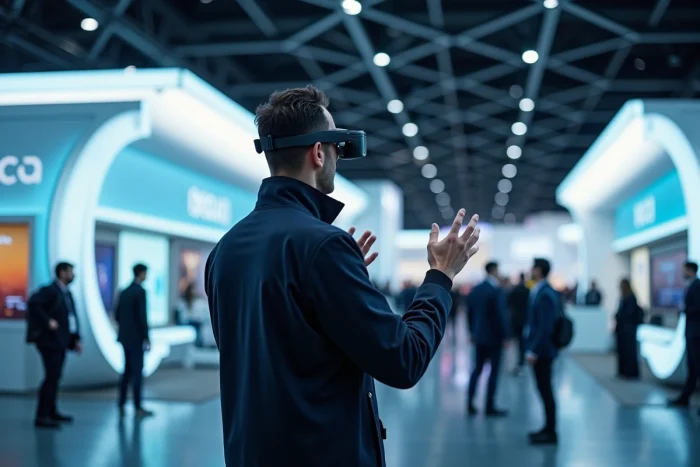
- The Halliday glasses project a screen directly into the field of vision. For a technician on-site who consults documentation while keeping their hands free, the gain is immediate
- The Omnia connected mirror analyzes health parameters (complexion, heart rate) during the morning routine, without wearing an additional sensor
- Nvidia’s Cosmos platform allows robots to learn in a virtual environment before interacting in the real world, reducing the time and cost of robotic training
These products are not all available for immediate purchase. They are mentioned because they illustrate a fundamental trend: high-tech innovations are migrating from gadgets to tools. The screen in the glasses is no longer a science fiction concept; it is a response to an operational problem.
Choosing tech products in 2025-2026: the criteria that matter
With the acceleration of launch cycles, the temptation is to chase every novelty. In practice, three filters help sort through them.
The first: compatibility with the existing ecosystem. A Samsung connected ring loses some of its functions if used with an iPhone. A Copilot+ PC without a Microsoft 365 subscription only utilizes a fraction of its NPU.
The second: software longevity. A connected object whose app is no longer updated after two years becomes a dead weight. One should look at the manufacturer’s update history before buying.
The third: the impact of regulation. A product that relies on a high-risk AI function classified by the AI Act could see its capabilities restricted by a future software update. It’s better to know this before purchase than to discover it afterward.
Current technological trends converge on a single point: AI is leaving the cloud to settle into everyday objects, from PCs to rings to bathroom mirrors. The difference between a relevant purchase and a gadget forgotten in a drawer lies less in the technical specifications than in the alignment with a real need and a changing regulatory framework.